
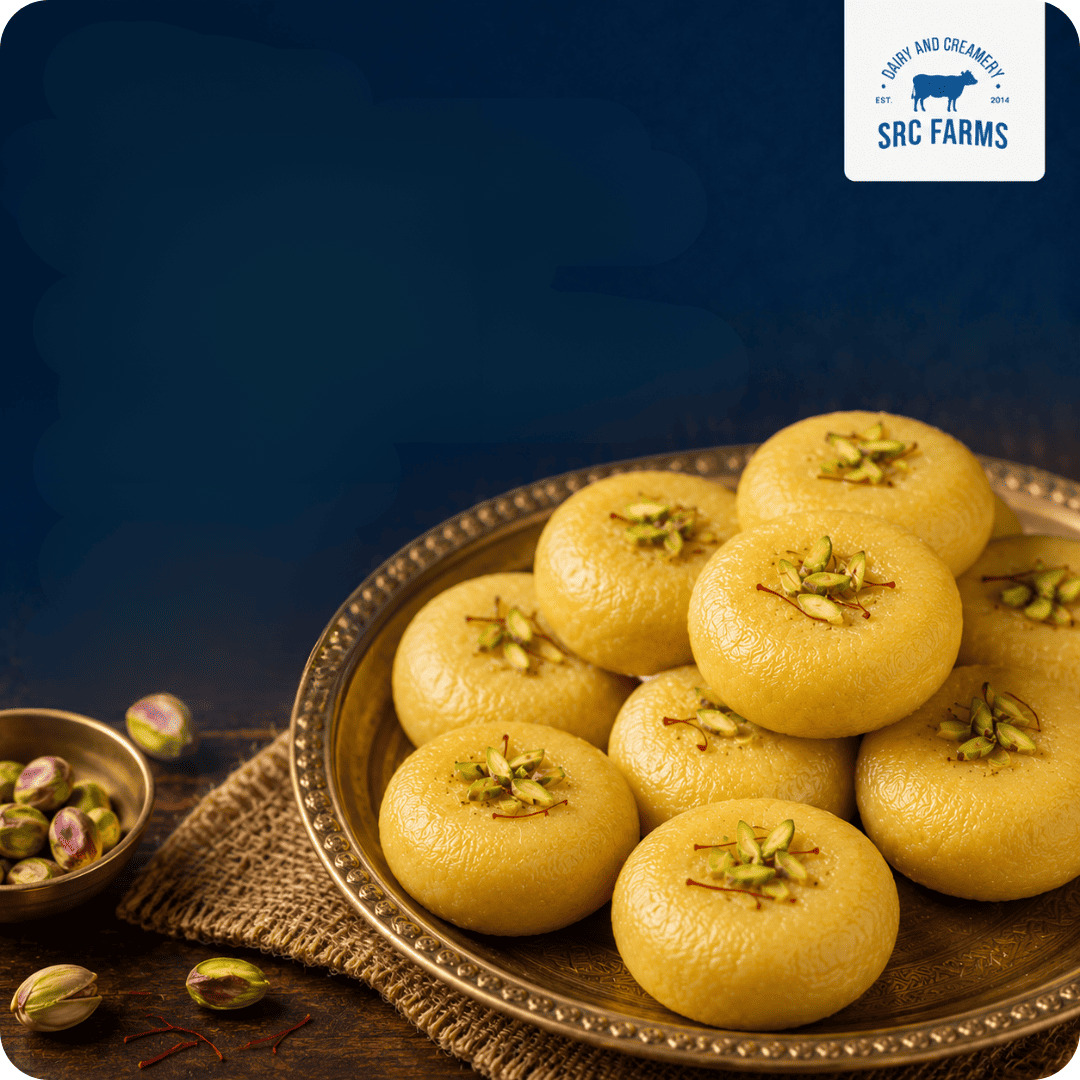
There’s something deeply comforting about the smell of simmering khoya filling your kitchen. That thick, creamy, milk-solid base has been the heart of Indian sweets for centuries from festive Peda to everyday Barfi. But the secret most sweet shops won’t tell you? The quality of your cow milk khoya can either lift a sweet to perfection or quietly ruin it.
If you’ve ever made Gulab Jamun that turned out rubbery, or Barfi that wouldn’t set properly, chances are the khoya was the problem, not your technique. Pure, full-fat cow milk khoya gives you that naturally sweet, slightly grainy texture that packaged or adulterated mawa simply can’t replicate.
These 5 traditional khoya sweets recipes have been picked because they actually work at home. No professional kitchen, no fancy equipment, just good mawa and the right method.
Why Cow Milk Khoya Makes the Difference
Khoya isn’t a one-size-fits-all ingredient. The cow milk variety carries more fat and a natural sweetness that buffalo milk mawa simply doesn’t have, which means you’re already cutting back on sugar before the recipe even begins. It also holds less water, and in binding-heavy recipes like Gulab Jamun and Peda. This difference shows up clearly in the final result.
Most store-bought mawa is a gamble. You don’t know if it’s made from whole milk, reconstituted milk powder, or a blend of both. When you buy Khoya online from a trusted source or use pure farm-sourced milk khoya, you’re working with a consistent ingredient and consistent ingredients give you consistent results.
It’s no surprise that home cooks who refuse to settle for average mithai keep coming back to SRC Farms for cow milk Khoya which is slow-reduced, preservative-free, and sourced from pure A2 cow milk. That’s exactly the kind of mawa these recipes are built around.
1. Classic Mawa Peda
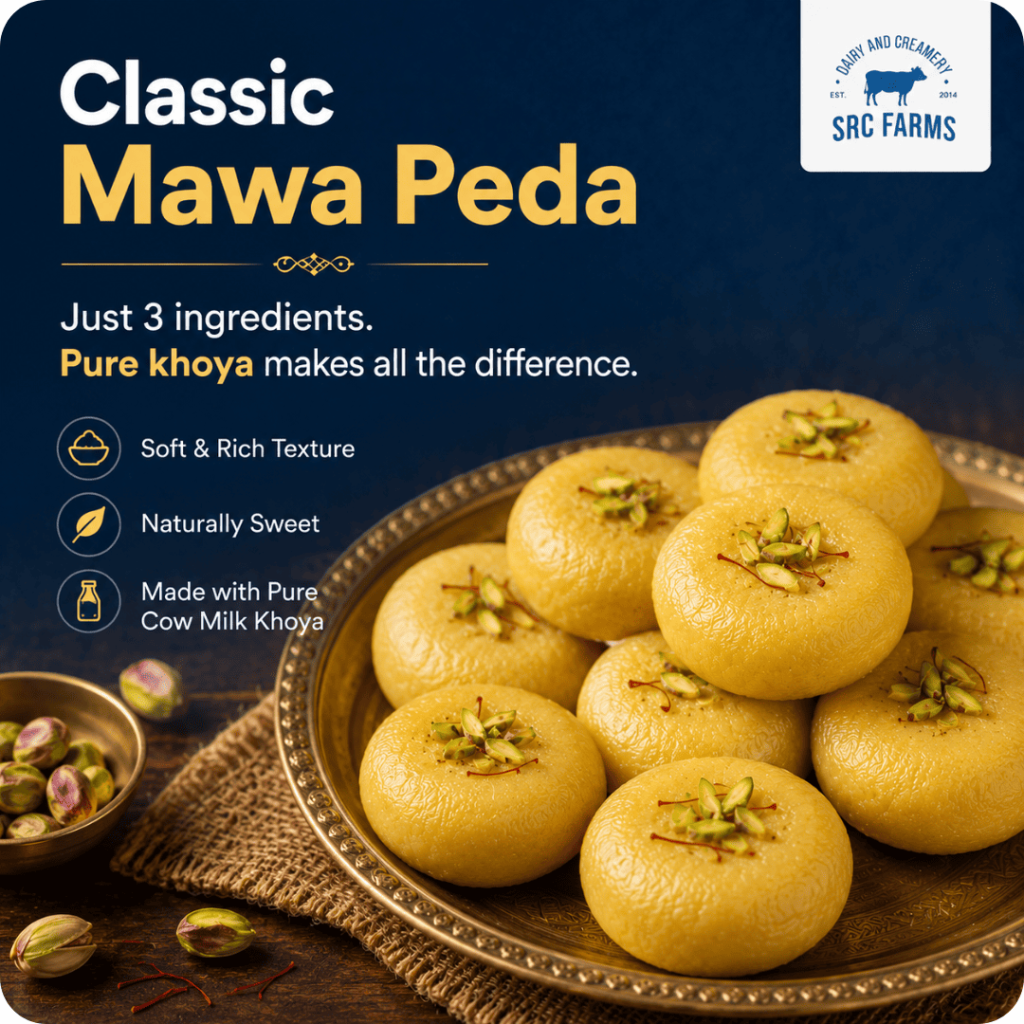
Peda is the simplest test of good khoya, just three core ingredients, so there’s nowhere to hide if the mawa isn’t right.
What you need:
- 250g khoya (grated or crumbled)
- 4–5 tbsp powdered sugar (adjust to taste)
- ¼ tsp cardamom powder
- Saffron strands soaked in 1 tsp warm milk (optional)
- Pistachios for garnish
How to make it:
Heat a non-stick pan on low flame. Add the khoya and stir continuously. The mawa will first soften, then start to pull away from the sides of the pan – this takes around 8–10 minutes. Don’t rush it on high heat.
Remove from flame. Let it cool for 5 minutes, then mix in the powdered sugar, cardamom, and saffron milk. Knead gently into a smooth dough. Portion into small balls, press lightly to flatten, and press a pistachio on top.
Peda sets at room temperature in about 30 minutes. The texture should be slightly firm on the outside, soft inside and a clear sign of good milk khoya with the right fat content.
2. Gulab Jamun from Scratch
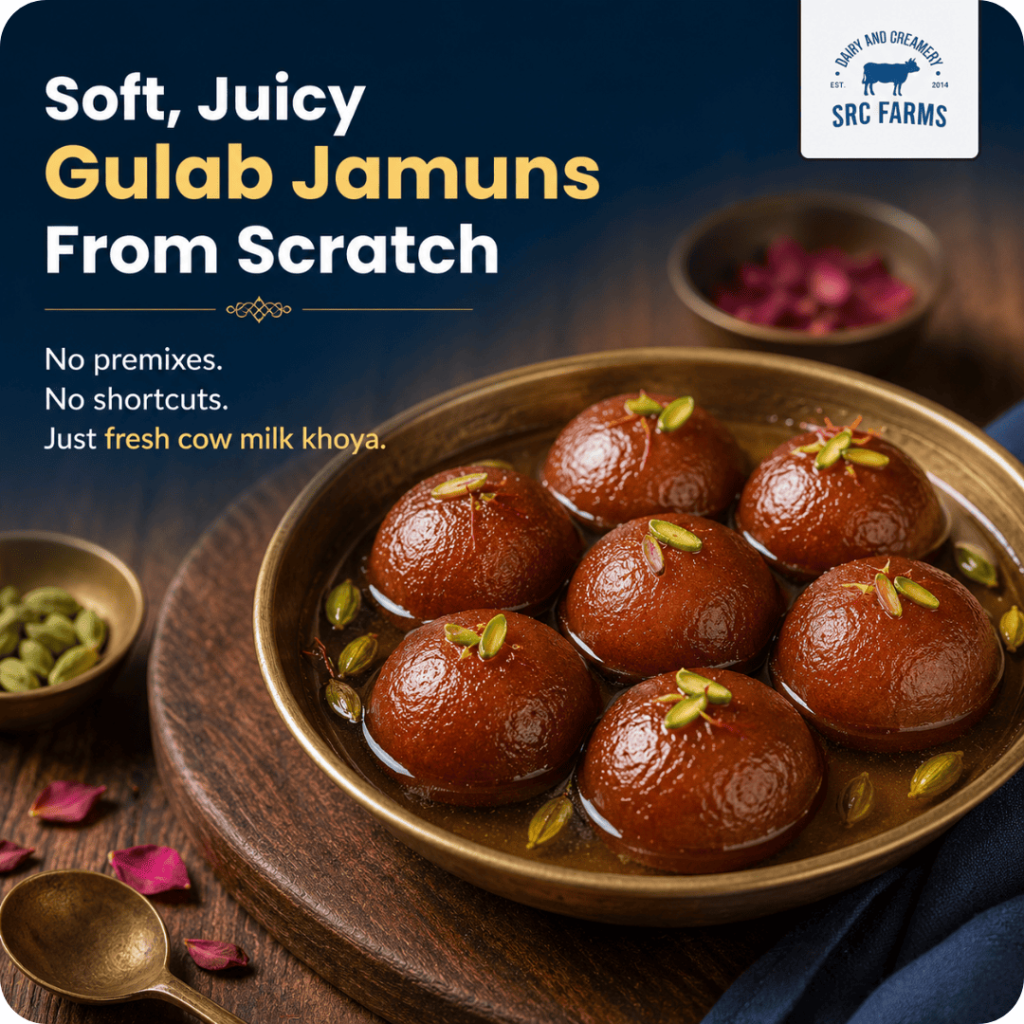
Most people use a box mix. Here’s the scratch version and it’s worth it.
What you need:
- 200g fresh khoya (grated fine)
- 2 tbsp all-purpose flour (maida)
- 1 tbsp full-fat milk (only if the dough feels dry)
- ½ tsp baking soda
- Oil or ghee for deep frying
For the sugar syrup:
- 1.5 cups sugar
- 1.5 cups water
- 4 cardamom pods
- 1 tsp rose water
How to make it:
Prepare the syrup first, combine sugar and water, bring to a boil, add cardamom, simmer for 5–7 minutes, then add rose water. Keep warm.
For the dough, mix grated cow milk khoya, maida, and baking soda together. Knead gently – don’t overwork it. Add milk only if needed. The dough should be soft and non-sticky. Rest for 10 minutes.
Roll into small smooth balls (no cracks on the surface or they’ll burst while frying). Fry on low-medium heat, stirring constantly, until deep golden. Drop immediately into warm syrup. Let soak for at least 1 hour before serving.
3. Mawa Barfi (Plain and Pistachio)
A mawa recipe that works every time, no setting agent required when the khoya has the right consistency.
What you need:
- 300g cow milk khoya
- ½ cup powdered sugar
- ½ tsp cardamom powder
- 2 tbsp crushed pistachios
- Silver vark (optional)
How to make it:
Cook the milk khoya on low heat, stirring until it becomes a smooth, thick mass – about 10 minutes. Take it off the heat and let it cool to a warm (not hot) temperature.
Mix in powdered sugar and cardamom. The mixture will loosen slightly as the sugar melts into the warm mawa and that’s normal. Pour into a greased tray lined with parchment. Press down evenly, top with crushed pistachios and silver vark.
Refrigerate for 45 minutes. Cut into diamond or square shapes. This Barfi holds shape well without refrigeration for 2–3 hours, a true sign of quality mawa with good fat content.
4. Khoya Kheer (Mawa Kheer)
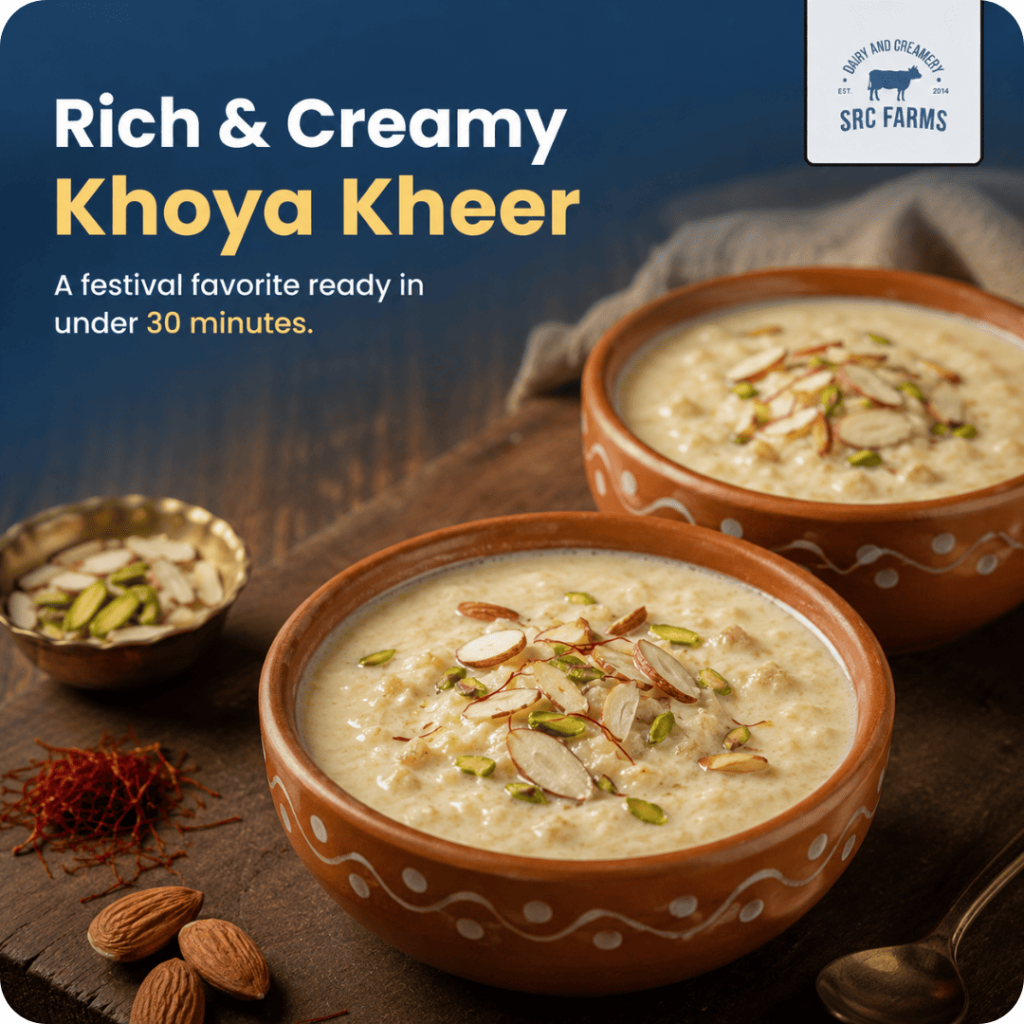
A thicker, richer cousin of regular milk kheer often made during festivals in North India. This is one of those khoya sweets recipes that looks difficult but comes together in under 30 minutes.
What you need:
- 150g khoya (crumbled)
- 500ml full-fat milk
- 3 tbsp sugar
- ½ tsp cardamom powder
- 2 tbsp soaked, peeled almonds (sliced thin)
- 1 tbsp raisins
How to make it:
Bring the milk to a gentle boil in a heavy-bottomed pot. Add the crumbled cow milk khoya and whisk to combine no lumps. Simmer on low heat for 10–12 minutes, stirring regularly, until the mixture thickens to a creamy consistency.
Add sugar, cardamom, almonds, and raisins. Stir for another 3–4 minutes. Remove from heat. Serve warm in winter, or chilled with a pinch of saffron in summer.
5. Mawa Modak (Festive Special)
This steamed or raw modak made with milk khoya instead of coconut is a beautiful variation for Ganesh Chaturthi and other celebrations.
What you need:
- 200g cow milk khoya
- 2 tbsp powdered sugar
- ¼ tsp cardamom powder
- 1 tbsp desiccated coconut (optional)
- A few drops of rose water
How to make it:
This is a no-cook mawa recipe when the khoya is fresh and soft. Simply combine all ingredients in a bowl and knead into a smooth, slightly firm dough. If the mawa is dry, warm it briefly on low heat for 2–3 minutes before mixing.
Press into a modak mould, or shape by hand into the traditional teardrop form. Refrigerate for 15 minutes before serving.
For a richer version, lightly toast the khoya first for 5 minutes on low heat before adding sugar. The slight caramelisation adds depth.
Tips for Working with Cow Milk Khoya at Home
Storage: Fresh cow milk khoya has a 3–4 day window in the refrigerator, airtight container, no exceptions. Beyond that, freeze it in usable portions. It defrosts without losing structure, which is more than you can say for most dairy ingredients.
Grating vs. crumbling: Cold mawa on a fine grater gives you a smooth, workable base for Peda and Barfi. For Kheer and similar recipes where the khoya melts into a liquid base anyway, skip the grater entirely and break it apart with your fingers and drop it in.
Checking freshness: Fresh milk khoya has a clean, milky scent with a faint natural sweetness. Sour means skip it if the smell doesn’t cook out. It intensifies, and it will carry through to whatever you’re making.
Why fresh mawa changes the recipe: SRC Farms Cow milk Khoya is made from A2 Gir cow milk, slow-reduced and additive-free. The natural sweetness in mawa this fresh is noticeable. Cut your sugar by 20–30% from the standard recipe amount and taste as you go. You’ll rarely need the full measure.
Make These Sweets Right, Every Single Time
Great mithai isn’t about complicated techniques, it’s about starting with the right ingredient. When your cow milk khoya is pure, fresh, and properly reduced, everything else falls into place. The Peda holds its shape. The Gulab Jamun soaks evenly. The Barfi cuts clean without crumbling.
But when the mawa is made from reconstituted milk powder or mixed-source milk, no technique saves it. It burns at lower temperatures, resists binding, and leaves a chalky aftertaste that lingers through the cardamom and saffron.
So before you start your next batch of homemade sweets, make sure the foundation is solid. Choose SRC Farms cow milk Khoya slow-reduced from A2 Gir cow milk, with no additives, no shortcuts, and the kind of natural creaminess that only real farm-fresh mawa can deliver. Have questions or want to place a bulk order? Call us directly at +91 9830279976 to get help.
Your family deserves sweets made the traditional way. Start with khoya that’s worthy of the recipe.
