
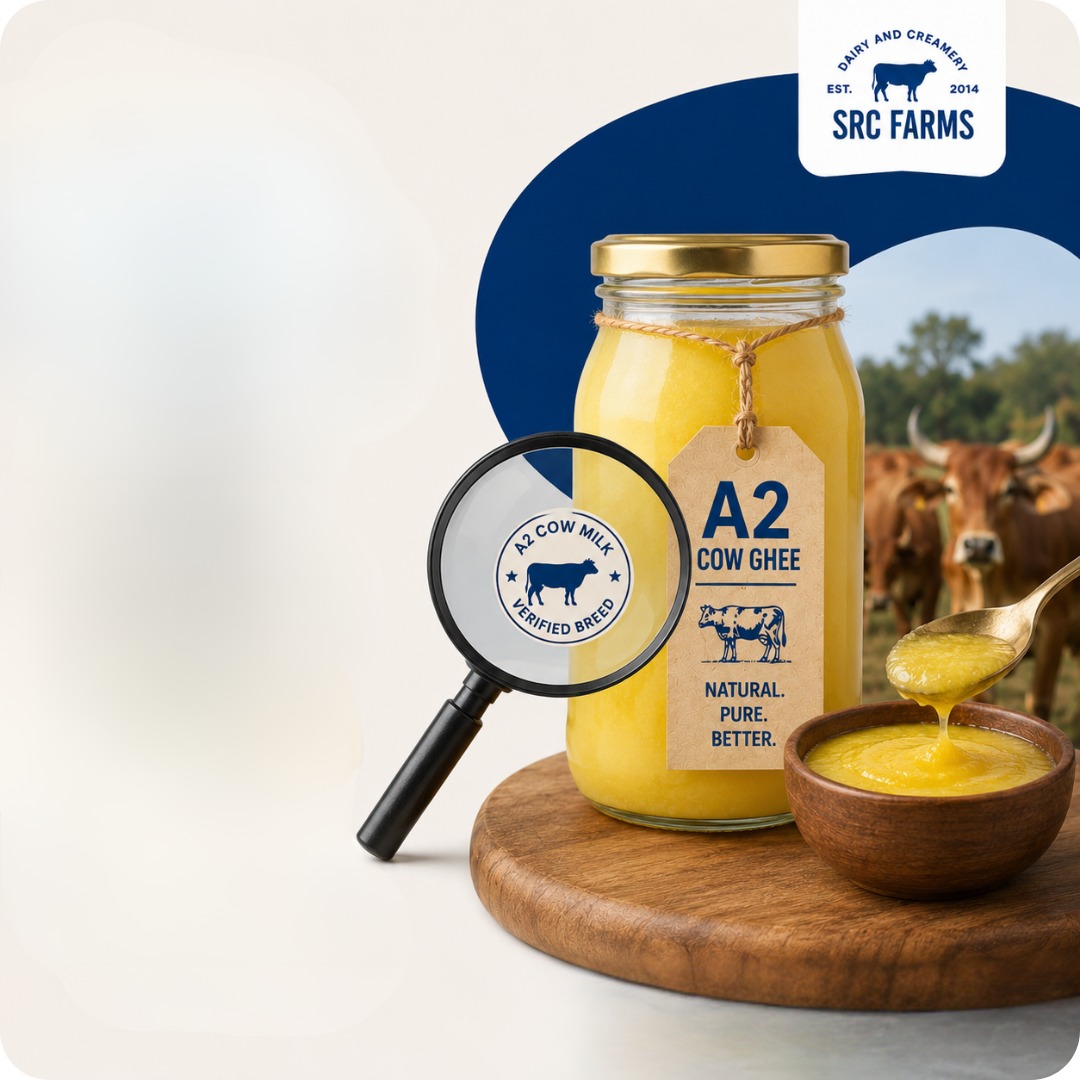
Open most “pure desi ghee” jars on a store shelf and you’ll find a mix of claims: A2, organic, farm fresh, traditional. Some of these are true. A lot of them aren’t. Ghee adulteration, mixing in vegetable oil, adding synthetic colors, passing off A1 milk as A2, is one of the most common food safety complaints in India, and it’s only getting harder to spot as demand for A2 pure cow ghee grows.
So how do you actually tell the real thing from a jar that just borrowed the label? That’s what this guide covers: what A2 ghee actually is, the tricks brands use to fake it, and the checks you can run before and after you buy.
What A2 Pure Cow Ghee Actually Is
A2 cow ghee comes from the milk of indigenous Indian cow breeds, Gir, Sahiwal, Red Sindhi, which produce A2 beta-casein protein. Crossbred or foreign cattle typically produce A1 protein instead. That one difference in protein structure is the reason desi A2 cow ghee has built a lot of people who get bloated or uncomfortable with regular dairy find A2 easier on the system.
There’s more to it than digestion, though. A2 pure cow ghee made from desi cow milk using traditional methods tends to have a deeper golden color, a stronger nutty aroma, and a denser nutrient profile. It also carries weight in Ayurvedic tradition, where ghee from indigenous breeds has long been used in cooking, skincare, and wellness routines.
Here’s why this matters for buying: if a label doesn’t say which breed the milk came from, you have no way to verify whether you’re getting actual A2 ghee or a regular blend wearing an A2 sticker.
How Brands Fake “Pure” A2 Ghee

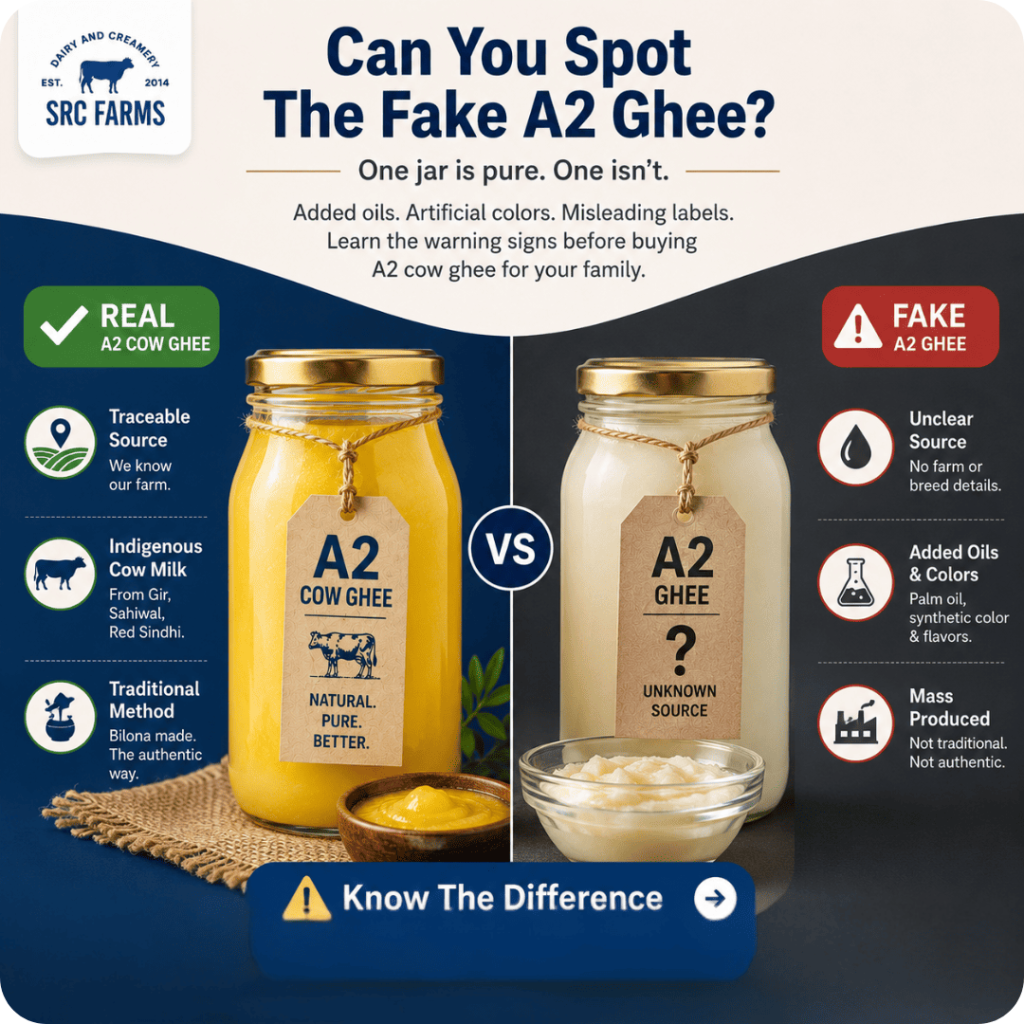
A few tricks show up again and again. Mixing in vanaspati or other vegetable oils is the most common, it cuts costs while keeping the texture close enough to real A2 pure cow ghee that most people won’t notice. Synthetic colors and flavoring agents get added to fake the golden hue and nutty smell of genuine cow A2 ghee, especially when the base is actually crossbred milk.
Then there’s straight-up mislabeling. Milk from A1-producing crossbred cows gets sold as A2 with zero breed verification behind it. Words like “organic,” “farm fresh,” and “desi” get used loosely too, with no traceability back to an actual farm, breed, or process.
None of this is obvious from the packaging alone. That’s why the checks below matter.
7 Ways to Spot Real A2 Cow Ghee
Some of these you can check before buying, just by reading the label and digging into the brand. Others are tests you run once you’ve got the jar at home, which tell you whether to trust that brand going forward.
1. Color and texture. Real A2 ghee is deep golden-yellow with a slightly grainy texture once it solidifies. If it’s pale or unusually smooth and uniform, oils or fillers.
2. Smell test. Pure A2 cow ghee smells rich and nutty, slightly sweet. Flat, artificial, or overly perfumed smells are a red flag.
3. Melting test. Pure ghee melts fast and turns golden-brown. Adulterated ghee tends to melt slower or stay pale even when heated.
4. Palm test. Put a small spoonful on your warm palm. Real ghee starts melting within a couple of minutes from body heat alone.
5. Certifications, before you buy. Check the label for FSSAI licensing and any lab testing or breed verification info. This is your first checkpoint at the point of sale.
6. Bilona or traditional method claims. Hand-churned, traditionally made ghee retains more nutrients, flavor, and aroma than mass-produced versions. Worth checking for on the label too.
7. Brand transparency. Brands that openly share their source farm, cow breed, and batch testing are far more trustworthy than ones that just print “pure” and “A2” and leave it at that. This is probably the single most reliable pre-purchase signal.
Why Sourcing Is the Real Differentiator
All of the above comes down to one thing: you can only trust ghee as much as you trust where it came from. When a brand controls the whole chain, cows, milk, processing, packing, there’s far less room for the mixing and mislabeling that leads to fake A2 pure cow ghee ending up on shelves.
This is where SRC Farms’ A2 Cow Ghee stands out. SRC Farms runs its own dairy farm in Hooghly, West Bengal, and the milk for their ghee is produced, processed, and packed there, on-site. No third-party milk collectors, no unverified sources in the chain, which is usually where adulteration creeps in.
For buyers, that kind of farm-to-jar visibility is one of the strongest signals of authenticity you’ll find, and it’s the bar worth holding any brand claiming to be the best A2 cow ghee to.
Picking the Best A2 Cow Ghee for Your Family
Once you’ve got the checks down, picking the best A2 cow ghee comes down to a short checklist. Ingredient list should read “100% A2 cow milk,” nothing else. Any added oils, flavoring, or preservatives, skip it.
Packaging matters too. Genuine A2 pure cow ghee usually comes in glass jars, which protect flavor better than plastic. Look for FSSAI details and batch or lab test info printed on the label, not just claimed somewhere online.
And go back to brand transparency: breed, farm location, production method (Bilona or otherwise), and real customer reviews that speak to consistency across batches.
SRC Farms A2 Cow Ghee checks these boxes, traceable sourcing from its own farm, traditional production, lab-tested batches. It’s a solid reference point for what pure A2 cow ghee should look like.
Conclusion – Buying A2 Ghee with Confidence
None of this is complicated once you know what to look for: color, texture, aroma, certifications, and how upfront a brand is about where its milk comes from and how it’s made. Get those right and you can tell genuine A2 pure cow ghee apart from products that are just borrowing the label.
If you want a brand that ticks all these boxes, SRC Farms is worth a look. The milk comes from their own farm, the ghee is made using traditional methods, and you can call +91 98302 79976 to know more or place an order.
Frequently Asked Questions
Is all desi ghee A2 ghee?
No. “Desi ghee” just describes the traditional method, it doesn’t guarantee the breed. For it to be desi A2 cow ghee, the milk has to come from indigenous breeds like Gir, Sahiwal, or Red Sindhi specifically.
How can I check A2 ghee purity at home?
The melting test, palm test, and checking color/texture all give you a rough read on A2 pure cow ghee. But they work best alongside checking certifications and sourcing before you buy, not instead of it.
What’s the shelf life of pure A2 cow ghee?
Stored cool, dry, and out of direct sunlight, pure ghee usually holds up for 9-12 months. Glass packaging keeps it fresher for longer than plastic.
Is A2 ghee better than regular ghee for cooking?
A2 ghee has a high smoke point, so it works fine for most Indian cooking. A lot of people also find cow A2 ghee easier to digest than A1-based ghee, though that varies person to person.
