
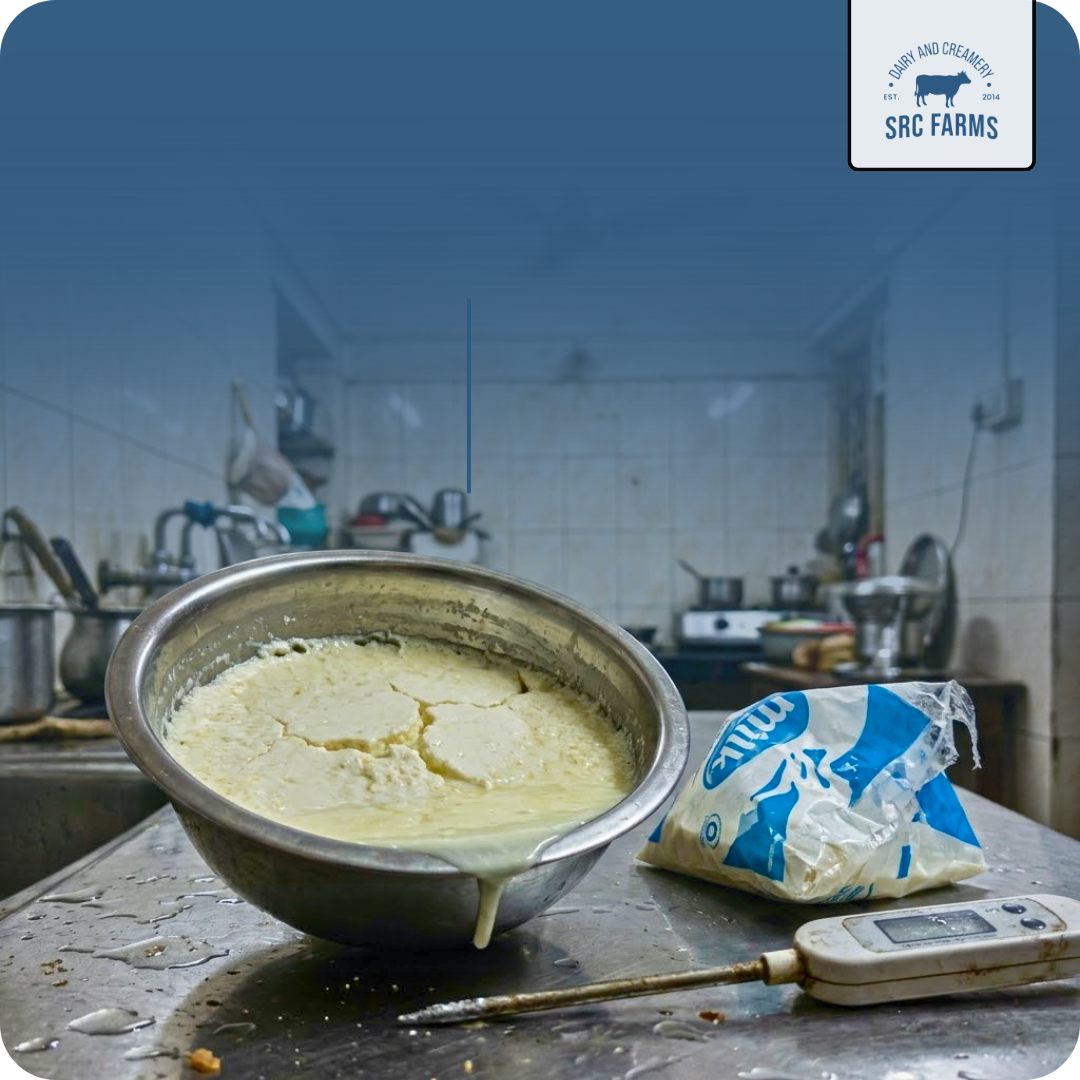
Most people think curd is simple. Boil milk, add a starter, and leave it overnight. Done. That’s the assumption. And that’s exactly why most curd you get today is inconsistent.
Here’s the reality. The quality of cow milk curd is decided long before fermentation even begins. It depends on the milk itself, how fresh it is, how it’s handled, and how carefully the process is controlled. If any of these go wrong, the result shows up in your bowl.
In India, curd is a daily staple. But studies and dairy reports have repeatedly shown that a significant portion of milk in urban supply chains faces issues like dilution, poor storage, or delayed processing. When milk quality drops, curd suffers first. That’s why you often see curd turning watery, overly sour, or lacking that firm, creamy texture.
In Kolkata specifically, heat and humidity make things worse. Milk spoils faster. Fermentation becomes unpredictable. Small handling mistakes get amplified.
So no, curd is not just “set milk.” Proper curd from milk is the result of a controlled process, starting from the source itself.
Let’s break down what actually makes the difference.

It Starts with the Milk. If That’s Wrong, Everything Is Wrong
You can’t fix bad milk later. If the milk is weak, diluted, or old, your curd is already compromised.
Good curd depends on milk proteins, mainly casein. When milk is fresh, these proteins form a tight network during fermentation. That’s what gives you thick, firm cow milk curd.
In reality, milk often travels long distances, faces temperature fluctuations, and sometimes gets diluted. By the time it’s used, its structure is already weakened.
The result is simple. Fermentation becomes unstable. The curd turns watery, loose, or overly sour.
In Kolkata, heat and humidity make this worse. Even small delays can impact quality. SRC Farms avoids this by keeping the milk within a controlled system from the start. Because once milk loses its integrity, nothing later can fix it.
Step 1: Fresh Milk Control, Not Dependency
Most brands depend on external milk supply. That means inconsistency is built into the system.
Milk is highly perishable. If it isn’t handled quickly, bacterial activity starts rising within hours. You may not notice it immediately, but it shows up when you try to set curd from milk. The texture weakens, and the curd doesn’t set properly.
In typical urban supply chains, milk passes through multiple hands before processing. Each step adds delay and risk. In Kolkata’s climate, this becomes even harder to control.
When the source is controlled and handling is tight, everything changes. The protein structure stays intact, fermentation becomes predictable, and the curd sets thick and balanced.
That’s the difference between relying on supply and controlling it.
Step 2: Clean Handling. No Shortcuts.
Even with good milk, poor handling can ruin the entire batch.
Curd depends on controlled bacterial activity. The moment unwanted microbes enter, they interfere. That’s when cow milk curd turns too sour, develops an off taste, or fails to set properly.
In many local setups, milk is exposed to air, containers aren’t properly sanitized, and handling isn’t consistent. These small gaps show up clearly in the final texture and taste.
In Kolkata, heat and humidity amplify the problem. Even minor lapses can affect the entire batch.
Clean handling is simple but strict. Minimal exposure, clean containers, and controlled movement at every step.
Get this wrong, and there’s no fixing it later.
Step 3: Heating the Milk the Right Way
This step looks simple. It’s not.
Most people think boiling milk is enough. Just heat it, cool it, and move on.
That’s exactly where things go wrong.
When milk is overheated or heated unevenly, its protein structure starts breaking down. And remember, curd depends on these proteins to form a stable texture. If they’re damaged, the curd won’t set properly. You’ll either get a loose, watery consistency or a grainy texture.
On the flip side, underheating is just as bad. If milk isn’t heated enough, harmful bacteria may survive, which interferes with fermentation later.
There’s a balance here.
Proper heating means:
- Bringing milk to the right temperature, not just “boiling it aggressively”
- Holding it long enough to make it safe
- Cooling it down to the ideal range before adding culture
In real life, this is why homemade cow milk curd often turns inconsistent. One day it’s perfect. The next day it’s watery. The difference is usually this step.
Controlled heating gives you predictability. And without predictability, you can’t get consistent curd.
Step 4: Natural Fermentation. Not Forced.
This is where milk actually turns into curd. And this is where most people rush and ruin it.
Fermentation is a controlled process. The culture needs the right temperature and enough time to convert milk into curd properly. If you rush it or try to force it, the balance breaks. That’s when curd turns too sour, the texture becomes uneven, and water starts separating.
This is common in fast production setups where speed matters more than quality.
In a city like Kolkata, the climate adds another layer. Warm temperatures can help fermentation, but they can also push it too fast. If the process isn’t controlled, curd sets quickly but loses its structure and taste.
Good curd from milk needs patience. When fermentation happens at the right pace, you get a firm set, balanced flavor, and consistent texture.
Rush it, and you get inconsistency. Simple as that.
Step 5: Setting the Curd for the Perfect Texture
This is where everything comes together.
You can get every step right, but if the curd doesn’t set properly, the result still falls apart. And setting isn’t just about leaving milk overnight. It’s about giving the process the right conditions to complete.
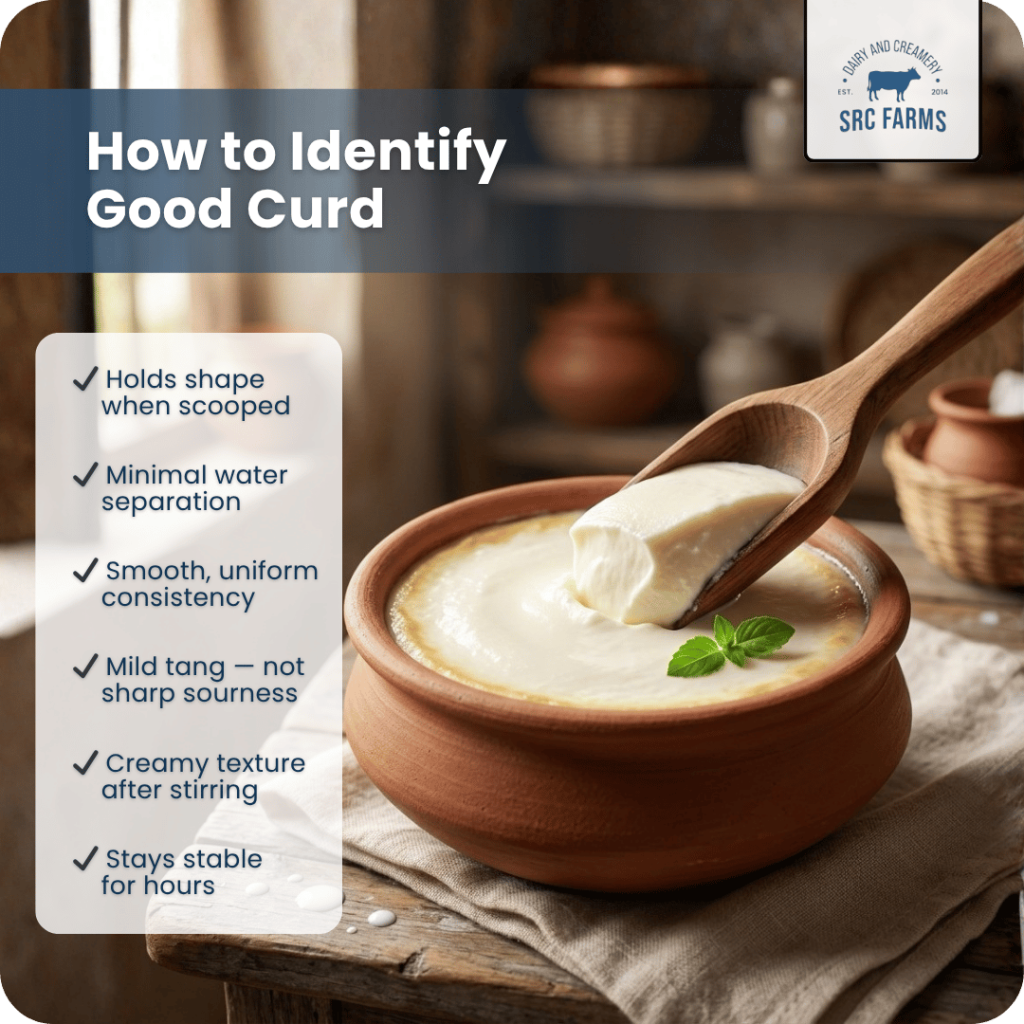
Good cow milk curd has a clear structure. It sets firm, holds its shape, and has a smooth, creamy consistency with minimal water separation. The taste is mildly tangy, not sharp or overpowering. That balance only happens when the earlier steps are executed properly and the setting process is not disturbed.
In most cases, what people see instead is loose texture, excess water, or uneven consistency. That usually comes from temperature fluctuations, moving the container too early, or incomplete fermentation.
Setting requires stability. The right temperature, no disturbance, and enough time for the curd to fully form. When these conditions are controlled, the result is consistent and predictable.
That’s the difference between curd that just “sets” and curd that sets right.
What Most Brands Won’t Tell You
Most curd in the market is built for speed, not quality. That’s the part nobody says out loud.
The goal is simple. Produce more, faster, at a lower cost. And to do that, compromises are made at the very base level.
Instead of fresh milk, many setups rely on reprocessed or standardized milk. The fat and protein content is adjusted for consistency, but that also weakens the natural structure needed for good cow milk curd. On top of that, fermentation is often rushed to meet volume demands.
The result shows up in your bowl.
The curd may look fine at first, but it doesn’t hold. Water starts separating quickly. The texture feels loose, and the taste leans more sour than balanced. That’s not how well-made curd behaves. That’s what happens when the process is optimized for efficiency instead of quality.
This isn’t about one brand. It’s a common industry practice.
Good curd needs strong milk, proper fermentation, and time. When any of these are cut short, the difference is obvious, even if most people can’t immediately explain why.
How to Identify Good Curd
You don’t need to be an expert to spot good curd. You just need to check a few things properly.
Here’s what to look for:
- Texture: It should hold its shape when you scoop it. If it collapses or releases a lot of water immediately, it’s weak.
- Water separation: A thin layer of whey is normal. Too much liquid on top means poor setting or weak milk.
- Consistency: It should look smooth and uniform. Grainy or broken texture is a red flag.
- Taste: Mild tang is good. Sharp sourness means over-fermentation or poor handling.
- After stirring: It should feel creamy, not watery.
- Stability over time: Good cow milk curd stays stable for hours. It doesn’t quickly separate or turn overly sour.
Once you start checking these, you’ll notice the difference instantly.
Most people don’t question curd. They just accept whatever they get. But when you know what to look for, it becomes very clear which curd is actually made right.
Final Word: If You Care About What You Eat, This Matters
Curd looks simple, but getting it right consistently is not. It comes down to the quality of milk, how it’s handled, and whether the process is controlled or rushed. That’s why most people experience inconsistency. Some days the curd is fine, other days it’s watery, too sour, or just off.
Once you understand how it’s actually made, the difference becomes obvious. Good cow milk curd is stable, firm, and balanced in taste. It doesn’t fall apart after a few hours, and it doesn’t leave you guessing every time you buy it.
If you’re tired of that inconsistency, the solution isn’t to keep adjusting expectations. It’s to choose curd that’s made right from the start. That means fresh milk, minimal handling, and fermentation that isn’t rushed just to push volume.
That’s exactly what SRC Farms focuses on. No shortcuts, no forced processes, just doing the basics right so the curd holds its texture, tastes clean, and stays consistent.If you’re done dealing with inconsistent curd, call +91 9830279976 and get it made right from the start.
