
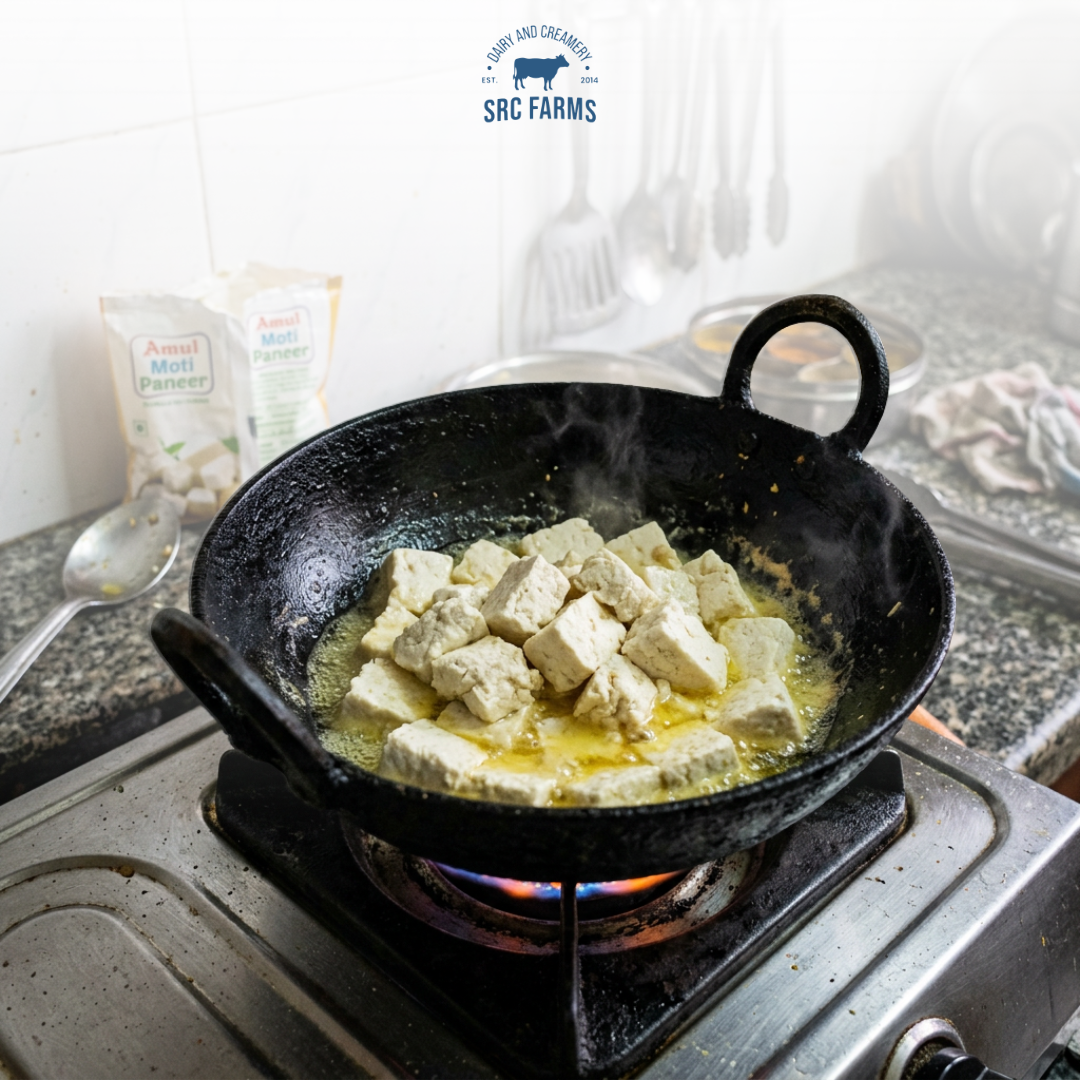
Most people blame the recipe when paneer tastes flat. They add more spice, more cream, more of everything. The dish gets heavier but not better.
The paneer is usually the problem.
What you find in most stores is made from buffalo milk. It’s firm, holds its shape under heat, and has very little flavour of its own. That’s why every paneer dish ends up tasting like the masala around it and nothing else.
Cow paneer is a different thing entirely. Softer, slightly creamy, with a natural sweetness that you can actually taste. Cook a piece on a hot tawa with just salt and ghee and you’ll know what’s been missing.This blog covers three simple dishes that highlight exactly what cow milk paneer brings to the table. No complex techniques, no long ingredient lists. Just recipes where the paneer does the work it’s always been capable of.
What Makes Cow Paneer Different
Buffalo milk has significantly more fat than cow milk. That’s what makes buffalo milk paneer so dense and rubbery. It survives high heat, holds its shape in gravies, and has a shelf life that works well for mass production. What it doesn’t have is much taste.
Paneer from cow milk is softer because the milk itself is lighter. The fat content is lower, the texture is more open, and it absorbs spices and marinades faster. There’s also beta-carotene in cow milk, which is why a good block has a faint off-white or slightly golden tint rather than that bright, almost plastic white you see in most store-bought blocks.
The simplest way to understand the difference is to test it. Same pan, same amount of ghee, same pinch of salt. Put a piece of each side by side on medium heat. Within two minutes, cow milk paneer has a smell, a colour, a presence. The buffalo milk version just sits there.
One honest thing to know: it’s more delicate than buffalo milk paneer. It crumbles more easily, so it needs gentler handling in gravies. That’s not a flaw, it’s a technique adjustment. And in dishes like bhurji or stuffed parathas, that crumble is actually what you want.
Recipe 1: Cow Paneer Bhurji
Bhurji is scrambled paneer. No sauce, no gravy, nothing to hide behind. Whatever your paneer actually tastes like, bhurji will show it. That’s exactly why it’s the first recipe here.
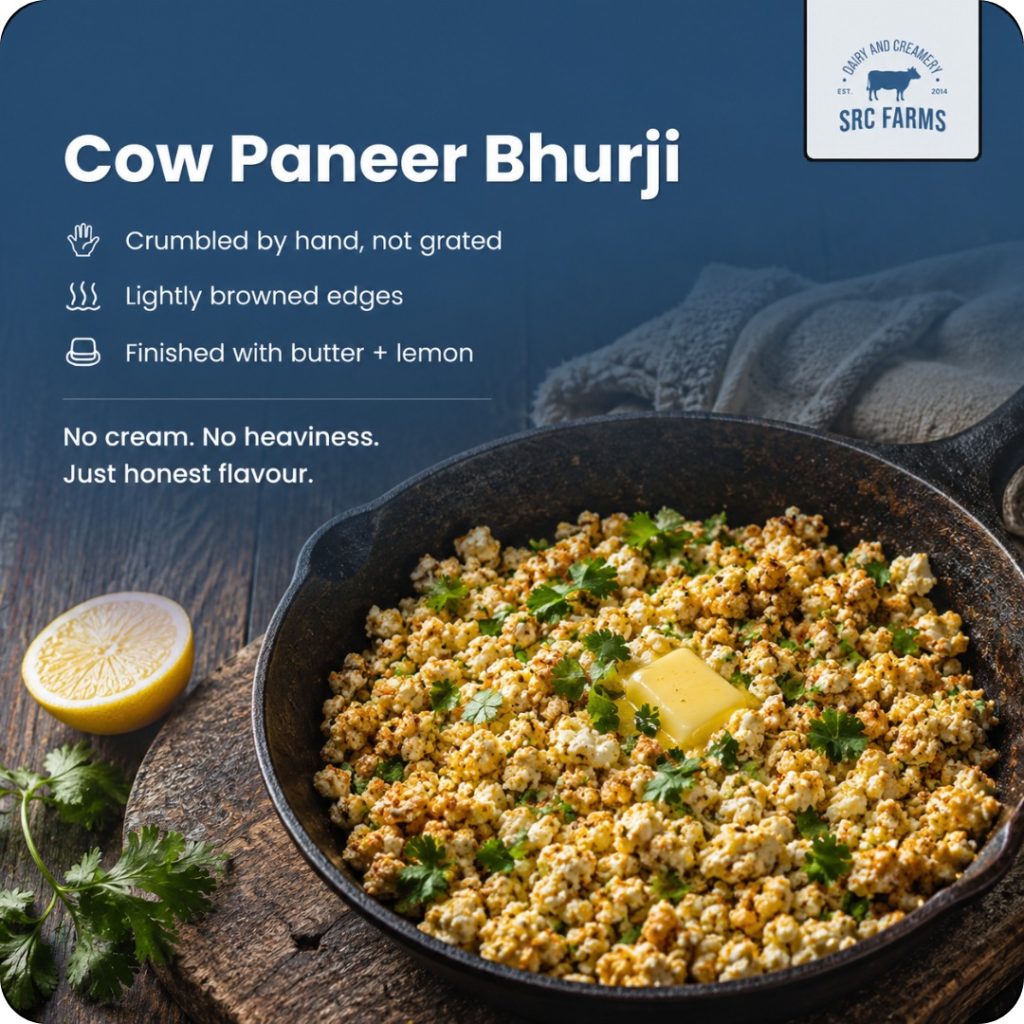
What you need:
- 250g paneer
- 1 medium onion, finely chopped
- 1 tomato, finely chopped
- 1 green chilli, chopped
- Salt, turmeric, cumin seeds
- Butter and lemon to finish
Crumble the paneer by hand into rough, uneven pieces. Don’t use a grater. A grater makes it too fine and you lose the texture that makes cow milk paneer worth using in the first place.
Heat oil in a pan on medium-high. Add cumin, let it splutter, then add onion and cook until the edges start to brown. Add tomato and chilli, cook until the tomato breaks down. Now add the crumbled paneer, a pinch of turmeric, and salt. Toss on high heat for 3 to 4 minutes. You want some light browning on the edges, not a full fry.
Take it off the heat. Add a small knob of butter and a squeeze of lemon. That’s it.No cream. No cashew paste. Cow paneer is rich enough on its own that you don’t need any of that. The bhurji should taste clean, slightly tangy, and like the paneer itself.
Recipe 2: Matar Paneer
Most matar paneer recipes are built around heavy spicing. That works fine when the paneer is bland because the masala carries everything. With cow paneer, that approach is actually working against you.

What you need:
- 250g paneer, cut into cubes
- 1 cup fresh or frozen peas
- 2 medium tomatoes, pureed
- 1 medium onion, finely chopped
- Ginger garlic paste, cumin, coriander powder, salt
- Kasuri methi and fresh coriander to finish
Cook the onion until golden, add ginger garlic paste, then the tomato puree. Keep the spicing simple here. Cumin, coriander powder, salt. That’s enough. Let the base cook down until the oil separates.
Add the peas, a splash of water, and let it simmer for 5 minutes. Now add the paneer cubes. Not before. Adding paneer too early is how it turns rubbery and tasteless regardless of which milk it comes from.
Three to four minutes on low heat is all it needs. The gravy should coat the cubes, not drown them. Finish with crushed kasuri methi and fresh coriander.The difference you’ll notice: the paneer and the gravy taste like they belong together. With paneer from cow milk, there’s a creaminess that blends into the base rather than sitting separately in it.
Recipe 3: Pan-Seared Paneer with Garlic and Chilli
This is the most straightforward recipe in the blog and the most revealing one. No gravy, no base, no spice blend. Just paneer in a hot pan with garlic, dried red chilli, and salt.
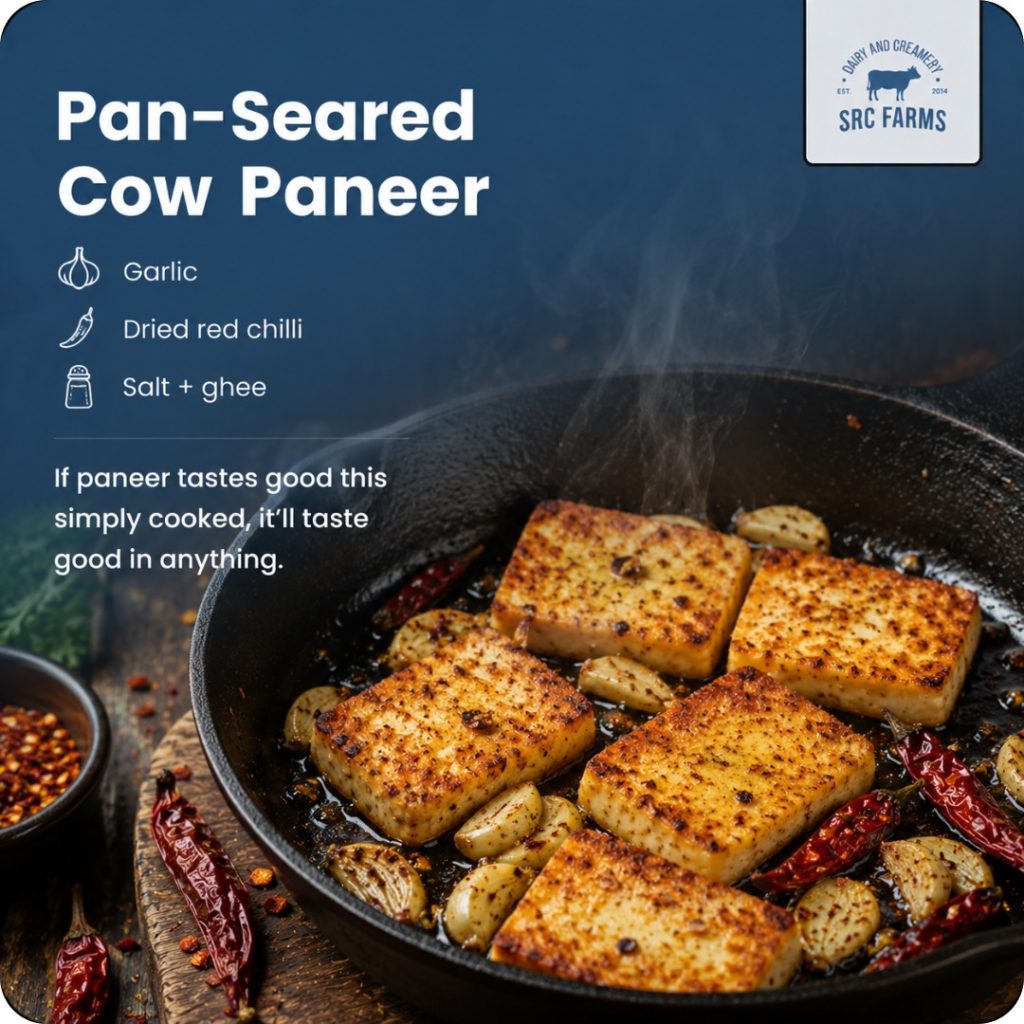
What you need:
- 250g paneer, sliced into thick rectangles
- 3 to 4 garlic cloves, thinly sliced
- 2 dried red chillies, broken
- Ghee or neutral oil
- Salt
Slice the paneer thick. Thin slices dry out before they get a proper sear. Pat each piece dry with a kitchen towel because moisture on the surface will steam the paneer instead of searing it.
Get the pan hot before anything goes in. Add ghee, then the garlic and chilli. Let them go for 30 seconds until the garlic is just starting to colour. Place the paneer in and don’t touch it. Two minutes on each side. You’re looking for a golden crust that lifts cleanly off the pan.
Salt it right after it comes off the heat.
That’s the entire recipe. Works as a starter, a salad topper, or something to eat standing at the kitchen counter at 11pm.If it tastes good here, cook this simply, it’ll taste good in anything. That’s the whole point of starting with a good cow milk paneer.
Where to Source Good Cow Paneer
Most supermarket paneers don’t tell you much on the front of the pack. Flip it over and check the ingredients. If it just says “milk” with no specification, it’s almost certainly buffalo milk.
Colour is a useful shortcut. A bright white, firm block is typically buffalo milk. Cow milk paneer has a slightly off-white or faintly yellow tint from the beta-carotene in cow milk. Not always, but often enough to be a reliable first check.If you want traceability, look for brands that are transparent about their source. SRC Farms makes their cow paneer from milk sourced from their own cows. That direct connection between the animal, the milk, and the final block is exactly the kind of supply chain worth paying attention to when ingredient quality matters to you.
Start Simple. Taste the Difference.
Good cooking doesn’t always mean better technique or more spices. Sometimes it just means starting with better ingredients. Paneer from cow milk is one of those ingredients that quietly improves everything around it without asking for much in return.
Start with the bhurji. It’s the fastest recipe here and the most honest test of what cow paneer actually tastes like. Once you’ve cooked it that way, the difference becomes hard to ignore.
SRC Farms sources milk directly from their own cows to make their paneer. You can reach them at +91 9830279976 for orders or queries. If you’re looking for a reliable place to start, that’s a good one.
Try it simply first. The masala can wait.
