
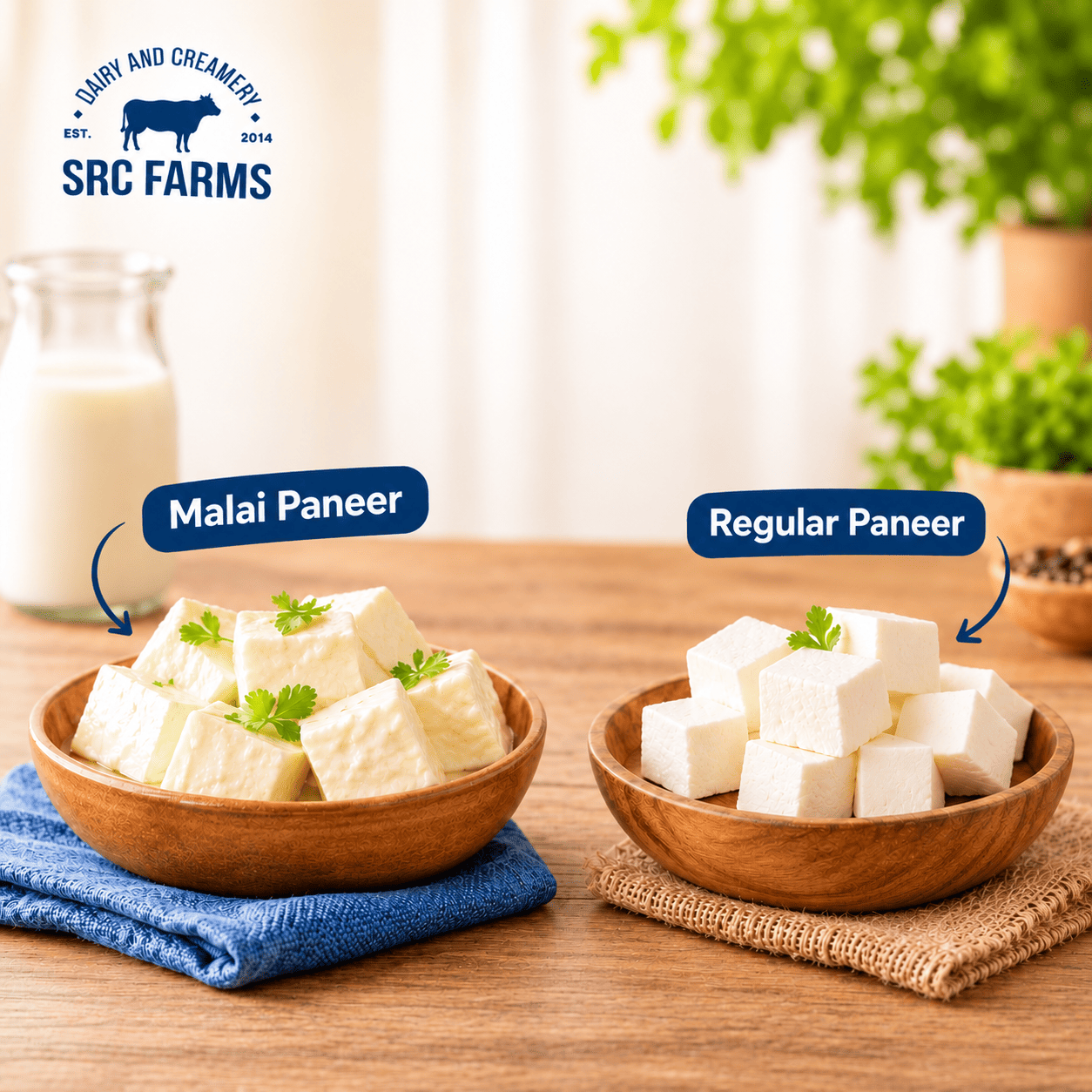
Two blocks of paneer can look identical on the shelf and behave completely differently in the kadhai. One stays firm and a little squeaky. The other melts into the gravy and tastes like it has cream in it. The gap between malai paneer and regular paneer mostly comes down to the milk and its fat, and you can learn to spot it before you buy.
Here is what actually sets them apart, which dishes suit which, and how to check what you are getting.
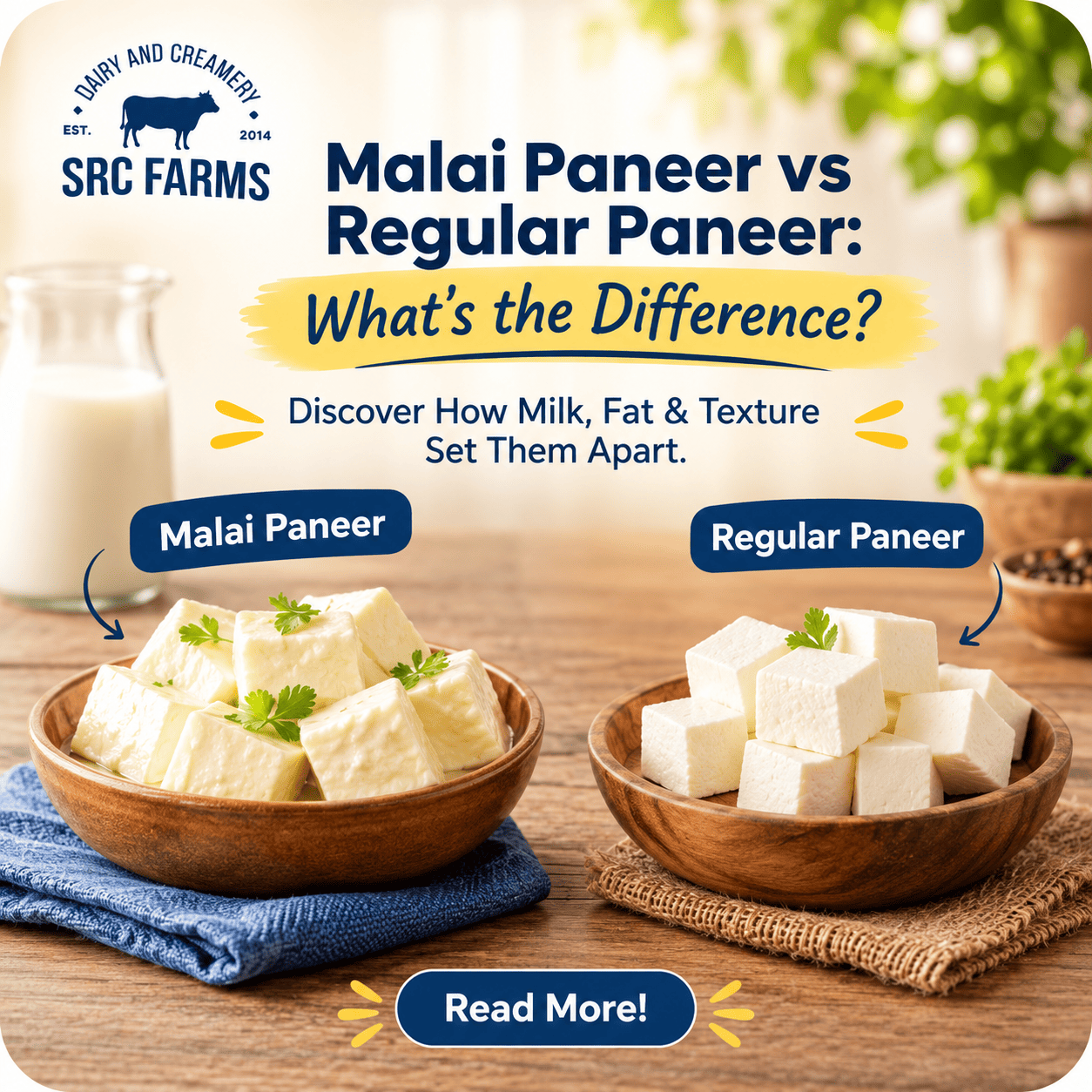
What Is a Regular Paneer?
Regular paneer is the everyday block you find at most counters and in most packets. Depending on the maker, it can be made from toned or lower-fat milk, which is why it often turns out firmer, chewier and a bit drier. That is not a flaw. It is why regular paneer holds its shape on a tikka skewer or a hot tawa without crumbling.
There is a legal side to this as well. Under FSSAI standards, paneer must contain at least 50 percent milk fat on a dry matter basis, with no more than 60 percent moisture. Lower-fat versions are allowed, but they must be sold in sealed packs labelled as medium fat or low fat, and a medium-fat pack has to state its milk fat percentage. Loose paneer from a counter has no label at all, so there you are relying on your eyes and the seller.
What Defines Malai Paneer?
Here is the honest bit: “malai paneer” is a market name, not a legal category. No rule says what a pack must contain to use the word. In practice it means paneer made from fuller-fat milk, so the block comes out softer, creamier and milkier, with a smooth bite that almost melts.
So what is malai paneer made of? At its simplest, milk and a coagulant to set it. The softness should come from the fat in the milk, which means a good one has a short ingredient list. Since the word is not regulated, the label does the real work. Check the milk fat figure, check whether the pack says low fat or medium fat, and read the ingredients.
Malai Paneer vs Regular Paneer: Texture, Taste and Cooking
Here is the quick comparison before the details.
| Feature | Malai paneer | Regular paneer |
| Milk used | Fuller-fat milk | Often toned or lower-fat milk |
| Texture | Soft, smooth, creamy | Firm, dense, a little chewy |
| Taste | Milky and rich | Mild and plain |
| When cooked | Tender, but can break up if overcooked | Holds its shape, can turn rubbery |
| Best for | Rich gravies, bhurji, sweets | Tikka, grills, stir-fries |
Texture and taste
Press a cube of each between your fingers. Malai paneer gives and springs back slightly, with a smooth, creamy feel. Regular paneer pushes back, denser and a little squeaky between the teeth. The taste follows the texture: malai paneer is milky and rich, while regular paneer is milder and plainer, which helps when the masala is doing the talking.
How each behaves when cooked
Soft paneer is delicate. Add malai paneer near the end of cooking and simmer gently, because a hard boil or heavy stirring can make it break up. Regular paneer takes more punishment. It survives grilling, deep frying and a long simmer, but it can turn rubbery if you overcook it. A 10-minute soak in warm water softens it before you cook.

Which Dishes Suit Which Paneer?
This is a guide, not a rule. Both work almost anywhere if you adjust the timing.
- Malai paneer suits: paneer butter masala, shahi paneer, bhurji, paneer paratha fillings and milk-based sweets, where softness is the point.
- Regular paneer suits: tikka, chilli paneer, grilled sandwiches, pulao and stir-fries, where the cubes need to stay intact.
A simple rule of thumb: if the paneer will sit in gravy, choose soft. If it will meet a flame or a hot pan, choose firm. Cooking for guests and cannot decide? Use regular paneer for the starter and malai paneer for the main.
How to Identify Malai Paneer and Tell It From Regular Paneer
Whichever kind you pick, a few checks help. No single check is perfect, but two or three together tell you most of what you need to know.
- Read the pack. Look for the milk fat figure, any low-fat or medium-fat label, and a short ingredient list.
- Press it. Malai paneer feels soft and springy. Regular paneer feels firm and dense.
- Look at it. Good malai paneer looks smooth and slightly glossy, in a creamy white. Drier paneer looks matte and may crumble at the edges.
- Smell it. Fresh paneer smells milky. A sour smell means walk away.
- Watch for red flags. A slimy surface, an oily film or a rubbery squeak means it is not at its best.
Is Malai Paneer Healthier Than Regular Paneer?
Not automatically. More fat means more calories, so malai paneer is richer by nature, and lower-fat versions exist for a reason. Both give you protein and calcium. Which is better depends on who is eating it. Someone watching calories may prefer a medium-fat or low-fat pack, while someone who wants a more filling meal may enjoy the fuller-fat kind. If you have a health condition, ask your doctor.
Want the wider picture on what paneer brings to your plate? Read our post on 7 powerful cow milk paneer benefits.
Our Cow Milk Malai Paneer
SRC Farms runs its own dairy farm in Hooghly, and the milk comes straight from that farm. Our cow milk malai paneer is made from fresh cow milk, prepared fresh at our plant and delivered directly to you with no middlemen. It has the soft, melt-in-the-mouth bite described above, which makes it a natural fit for gravies, bhurji and anything where you want paneer to blend in.
Frequently Asked Questions
Can I substitute regular paneer for malai paneer?
Yes, in most dishes. Expect a firmer bite, and soak regular paneer in warm water for 10 minutes if you want it softer. Going the other way, add malai paneer later in the cooking, since it is more delicate.
Is malai paneer the same as fresh paneer?
No. “Fresh” tells you how recently it was made, while “malai” describes softness and richness. Malai paneer can be fresh or not, so check the date on the pack.
Which paneer is better for paneer butter masala?
Malai paneer, if you want a creamy, tender bite in the gravy. Regular paneer also works, especially if you lightly pan-fry the cubes first.
Does malai paneer crumble when cooked?
It can, if you boil it hard or stir it roughly. Add it near the end and let it warm through in the gravy.
How should I store paneer at home?
Keep it refrigerated in an airtight container, follow the storage instructions on the pack, and use it soon after opening.
The Bottom Line
Regular paneer is firm and dependable. Malai paneer is soft and rich. Neither wins every dish, so match the paneer to the recipe, and read the label, because “malai” is a name and not a standard. Next time you shop, flip the pack over before you decide.
If you want the soft, creamy kind, try our cow milk malai paneer in your next gravy, and explore the rest of the range at SRC Farms.
