
Short answer first. A2 milk for babies under one year is not something you start with. Breast milk or infant formula stays the main drink for the first 12 months, and that rule applies to every kind of cow’s milk, A2 included.
After the first birthday, things change. A2 milk can be a sensible choice for a toddler, and many parents like it. It is not a cure for allergies, though, and your child does not need it to grow well. Here is what parents actually need to know.
What A2 Milk Is, in Three Sentences
Cow’s milk contains a protein called beta-casein, which comes in two main types, A1 and A2. A2 milk comes from cows whose milk has only the A2 type, and some families find it gentler on the stomach. If you want the full comparison, read our post on A2 milk vs regular milk.
Can Babies Drink A2 Milk? Is It Safe for Infants?
Not as a main drink. The American Academy of Pediatrics (AAP) lists cow’s milk as “none” for babies aged 6 to 12 months, and the reasons are practical:
- It is not complete nutrition. Cow’s milk does not give babies under one year everything they need.
- It is low in iron and vitamin C. A growing baby needs more than it offers.
- It is heavy on young kidneys. The protein and mineral load can strain them, especially during fever, diarrhea or heat.
- It can irritate the gut. The protein can cause small amounts of blood loss, which may lead to iron-deficiency anemia.
Swapping formula for A2 milk changes none of that. If you want to use milk in cooked food, like porridge, once your baby has started solids, ask your pediatrician first.
A2 Milk for Toddlers: What Changes After Age One
From 12 months, plain whole milk is the usual choice. The AAP advises whole milk for children aged 12 to 24 months, because toddlers are growing fast and need the fat. Skip toned or skimmed milk unless your pediatrician says otherwise. A2 milk for toddlers works the same way: full-fat, plain, with no sugar or flavoring added.
How much A2 milk should toddlers drink?
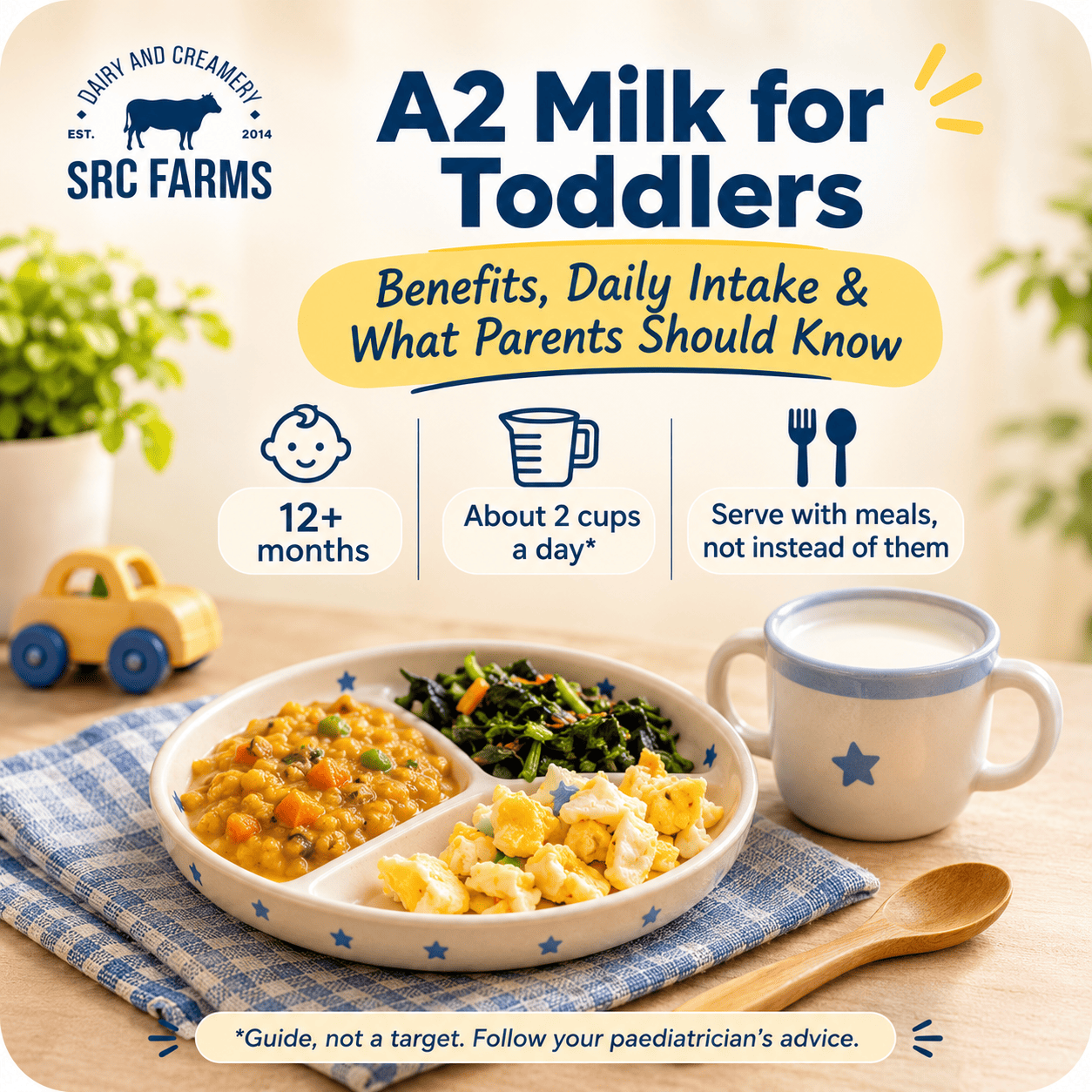
Less than most parents think. The AAP suggests about 2 cups a day (16 oz, roughly 475 ml) for children aged 12 to 24 months. Treat that as an upper guide, not a target, and know that your pediatrician may suggest less.
The catch is iron. A toddler who fills up on milk often eats less dal, eggs and greens, and low iron is one of the most common nutrition gaps at this age. Serve milk alongside meals, not instead of them.
What Are the Benefits of A2 Milk for Children?
Honest answer: the evidence for babies and children specifically is thin. Some parents say their child has fewer tummy complaints on A2 milk. A few small studies in adults with milk-related discomfort point the same way. None of this is proven for young children, so treat A2 as an option, not a guaranteed upgrade.
What A2 milk does offer is what any cow’s milk offers: protein, calcium and vitamin B12 in an easy form. That is reason enough to include milk in a toddler’s day, whether it is A1 or A2.
Is A2 Milk Suitable for Allergic Children?
No, not if the child has a cow’s milk protein allergy. A2 milk is still cow’s milk. It contains the same family of proteins that trigger the allergy. Signs usually show up soon after a feed: hives, vomiting, swelling around the lips, wheezing, or blood in the stool. If you see any of these, stop the milk and call your doctor.
Lactose intolerance is a separate issue, and A2 milk still contains lactose, so it does not solve that either. If you suspect either problem, get a proper diagnosis before changing anything. Treating A2 milk as a workaround for allergies is a common mistake.
How to Serve It Safely
SRC Farms runs its own dairy farm in Hooghly, and the milk comes straight from that farm, so you know where every litre starts. Fresh farm milk is unpasteurised, though, and that matters most when it is for a small child.
- Boil it fully before serving. Bring it to a rolling boil, then let it cool until lukewarm.
- Use it the same day, or refrigerate it right away and boil it again before the next serving.
- Never serve it raw, even if it looks fresh and clean.
- Start with a small amount and watch for rashes, vomiting or loose stools over the next day or two.
Our A2 cow milk is farm fresh, but fresh does not mean ready to drink. For children, boiling is not optional.
Questions to Ask Your Pediatrician
- Is my child ready for milk as a drink, and at what age?
- How much milk is right for my child’s weight and appetite?
- Does a family history of allergies change anything?
- Should I check iron levels if my toddler drinks a lot of milk?
Frequently Asked Questions
At what age can a child start A2 milk?
As a drink, from 12 months, with your pediatrician’s go-ahead. Before that, breast milk or formula comes first.
Is A2 milk better than regular milk for kids?
Not proven. Some parents prefer it for comfort, but both give similar protein and calcium. Pick the one your child tolerates and you can afford to buy regularly.
Can A2 milk prevent allergies in children?
No. There is no reliable evidence that it prevents or treats allergies. If your child is allergic to cow’s milk protein, A2 milk is not safe.
Can I mix A2 milk into baby food?
Ask your pediatrician first. Cow’s milk as a drink is not advised before 12 months, and it should never replace formula or breast milk.
Is A2 milk for babies safer than formula?
No. Formula is made to meet an infant’s needs. A2 milk for babies under one year is not a substitute.
The Bottom Line
For infants, nothing changes: breast milk or formula first. For toddlers, A2 is a fine, plain, full-fat option when it is boiled and served in sensible amounts. A2 milk for toddlers is a choice, not a requirement.
If you decide to try it, SRC Farms supplies A2 cow milk from its own farm in Hooghly. Talk to your pediatrician, start small, and always boil.
